

Zigbee and Z-Wave Water Leak Sensors Compared: 9 Sensors by Hub Compatibility
A hub-dependent leak sensor is the cheapest hardware in home water protection and the most expensive decision, because you are not really choosing a sensor — you are choosing which hub you will be living with for the next several years. Every product here is inexpensive; the money and the lock-in sit in the hub it binds to. Research-based comparison — we have not physically tested these products. Our analysis uses manufacturer specifications, manuals, warranty/support policies, safety certifications, independent test data where available, and current marketplace availability. The comparison below is therefore organized around one question the mainstream roundups tend to compress into a single line: exactly which hubs will this sensor join, and which will it refuse?
Comparison Table
Products are grouped by price tier, from lowest to highest. “Hub Compatibility” reproduces what each manufacturer states — the difference between “requires our hub” and “works with any Zigbee 3.0 hub” is the single most consequential spec on this page.
| Product | Brand | Price Tier | Protocol | Hub Compatibility (per manufacturer) | Key Details |
|---|---|---|---|---|---|
 Aqara Water Leak Sensor Aqara Water Leak Sensor |
Aqara | <$30 | Zigbee | Aqara Hub only — listing states it is not compatible with other brands’ hubs | Detects water as shallow as 0.5 mm; IP67 housing; must stay within a stated 400 in. (~10 m) of the hub; 1-year warranty |
 NEO Zigbee Water Sensor NEO Zigbee Water Sensor |
NEO | <$30 | Zigbee | SmartThings; Home Assistant via Zigbee2MQTT only — listing states it cannot connect directly to ZHA; not compatible with IFTTT | 1.2 m probe cable for hard-to-reach placement; raised-bump probe design to limit false alarms; 45 m stated range; 6+ months standby on AAA |
 SONOFF SNZB-05P Zigbee Water Leak Sensor SONOFF SNZB-05P Zigbee Water Leak Sensor |
SONOFF | <$30 | Zigbee 3.0 | Any Zigbee 3.0 hub | CR2477 cell rated up to 5 years; re-reports every 10 minutes while water is present so an alert is not missed during network drops; local gateway alarm works independently of WiFi |
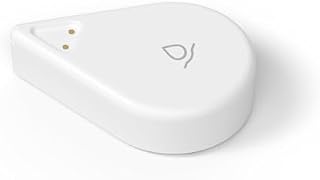 THIRDREALITY Zigbee Water Leak Sensor WL2 THIRDREALITY Zigbee Water Leak Sensor WL2 |
THIRDREALITY | <$30 | Zigbee 3.0 | Broadest list here — Home Assistant (ZHA and Z2M), SmartThings, Homey, and Echo devices with a built-in Zigbee hub (Echo 4th Gen, Echo Studio, Eero 6/Pro 6 and others) | Rated 3-year battery life on 2 × AAA (not included); IP65; silent — no built-in siren; OTA firmware updates; Apple Home and Google Home via a separately sold bridge |
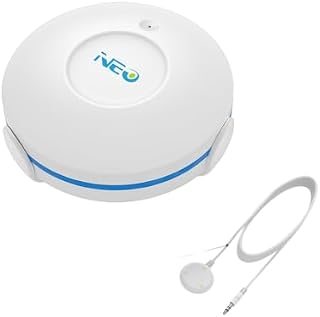 NEO Z-Wave Plus 700 Series Water Leak Sensor NEO Z-Wave Plus 700 Series Water Leak Sensor |
NEO | <$30 | Z-Wave Plus (700) | Z-Wave hubs; listing names Home Assistant and Hubitat | 700-series chip for wall penetration into basements and attics; long-range remote probe detecting from 0.5 mm; CR2 cell; can trigger a siren or a smart valve as an automation |
 Ezlo 800 Series Z-Wave Water Leak Detector Ezlo 800 Series Z-Wave Water Leak Detector |
Ezlo | <$30 | Z-Wave (800, LR-capable) | Ezlo and other Z-Wave hubs; Home Assistant; Alexa and Google Assistant through a hub | 2-in-1 leak and temperature monitoring; operates locally without constant cloud access; 300 ft stated range, extended in Z-Wave Long Range mode on a supporting hub; built-in prongs or extension probe |
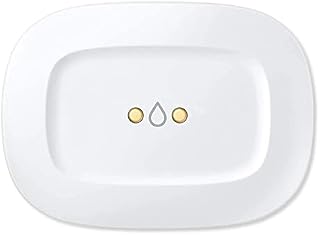 Aeotec SmartThings Water Leak Sensor Aeotec SmartThings Water Leak Sensor |
Aeotec | $30-75 | Zigbee | Aeotec/Samsung SmartThings hubs; listing adds that it also works with other compatible Zigbee hubs | Also reports temperature, with a 32-104°F operating range; choice of light-up or siren alert; can drive automations that shut off water or power; 50-130 ft range depending on construction; battery included |
 Zooz 800 Series Z-Wave Long Range Water Leak XS Sensor ZSE42 Zooz 800 Series Z-Wave Long Range Water Leak XS Sensor ZSE42 |
Zooz | $30-75 | Z-Wave (800, Long Range) | Open Z-Wave systems — Home Assistant, HomeSeer, Hubitat, Ezlo, Z-Box, SmartThings. Explicitly not supported by alarm panels including Ring Alarm, Vivint, Qolsys, 2GIG and ADT, or by older Vera hubs | Up to 300 ft open-air, or up to 1300 ft in Z-Wave Long Range mode on a supporting hub; S2 security with SmartStart; IP66 with sealed battery cover; 5-year warranty once registered |
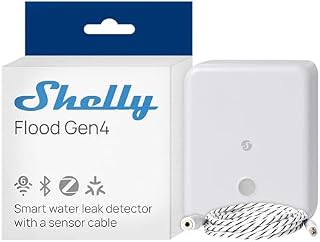 Shelly Flood Gen4 Shelly Flood Gen4 |
Shelly | $30-75 | WiFi, Bluetooth, Zigbee and Matter | Widest by design — Alexa, SmartThings, Google Home and Apple HomeKit, or the Shelly app directly; can run without a Zigbee hub over WiFi | The only multi-protocol sensor here, so the hub decision can be deferred or changed later; leak sensor cable extends coverage; flood and rain detection; IP44; 3-year warranty |
The Spec That Actually Decides This: Which Hub Will It Join?
Sort the table by hub compatibility rather than price and it splits into three groups that behave very differently over time.
Vendor-locked. The Aqara Water Leak Sensor is the clearest example: its listing states plainly that an Aqara Hub is required, that hubs from other brands are not compatible, and that Zigbee2MQTT and comparable third-party stacks are outside the supported path. If you already run Aqara, that is a non-issue and the sensor is excellent value. If you do not, the true cost of this sensor includes a hub you would not otherwise buy, and it will not follow you if you later change ecosystems. Wyze’s leak sensors, also present in this category, work the same way around the Wyze Sense Hub.
Conditionally open. The NEO Zigbee Water Sensor is the case that catches people out. It advertises SmartThings and Home Assistant compatibility, but the fine print states it needs Zigbee2MQTT and cannot connect directly to ZHA — the Zigbee integration many Home Assistant users start with. Both are Home Assistant, and only one of them works. If you are running ZHA and do not want to stand up an MQTT broker, this sensor is not a fit however clearly its title says “Home Assistant”.
Genuinely open. The THIRDREALITY WL2 on the Zigbee side and the Zooz ZSE42 on the Z-Wave side publish the longest and most specific compatibility lists here — the WL2 covering ZHA and Z2M alike plus Echo devices with built-in Zigbee radios, the Zooz naming Home Assistant, HomeSeer, Hubitat, Ezlo, Z-Box and SmartThings. Zooz is also the only manufacturer in this table that publishes an explicit incompatibility list, ruling out Ring Alarm, Vivint, Qolsys, 2GIG and ADT panels. That is more useful than a longer compatibility list, because it is the claim that can be checked before purchase rather than discovered after.
Protocol-agnostic. The Shelly Flood Gen4 sidesteps the question by speaking WiFi, Bluetooth, Zigbee and Matter, so it can run without a hub at all over WiFi and be moved onto a Zigbee or Matter setup later. For a household that has not settled on an ecosystem, that optionality is the feature.
Zigbee or Z-Wave?
The practical differences show up in the specs on this page rather than in the protocol theory. Z-Wave’s advantage in this table is range: the Zooz ZSE42 is rated at up to 300 ft open-air and up to 1300 ft in Z-Wave Long Range mode on a hub that supports it, and the Ezlo 800 Series makes the same claim structure. Z-Wave also runs on a sub-GHz band rather than the crowded 2.4GHz spectrum shared with WiFi and microwaves, which matters in a basement corner or behind a steel appliance.
Zigbee’s advantages are cost, hub ubiquity and, increasingly, the Matter transition. Several Echo devices carry a built-in Zigbee radio, so a Zigbee sensor may need no hub purchase at all in a household that already owns one — the THIRDREALITY WL2 lists exactly this. Zigbee sensors here also skew cheaper, with four of the six Zigbee-family products in the under-$30 tier.
Range figures across both protocols deserve a caution: the Aqara listing states a maximum of 400 inches — roughly 10 meters — between sensor and hub, an order of magnitude below the Zooz and Ezlo claims. These numbers are measured differently by different manufacturers, and mesh networks extend effective range through mains-powered nodes in ways a single point-to-point figure does not capture. Treat the published number as a rough tier indicator, not a specification you can design a floor plan around. Our water leak detector by hub type guide works through the protocol choice in full.
Notes on Each Product
Aqara Water Leak Sensor — Sensitive detection down to 0.5 mm (about 0.02 in.) in an IP67 housing with a rust-resistant coating, and it can trigger other Aqara devices as an automation as well as sounding the alarm on the Aqara Hub. The constraints are all ecosystem constraints: an Aqara Hub is required and sold separately, third-party hubs are not supported, the sensor should stay within a stated 400 inches of the hub, and the hub itself needs 2.4GHz WiFi (some models 2.4/5GHz, with wired Ethernet on the M2). One-year manufacturer warranty.
NEO Zigbee Water Sensor — Its differentiator is the 1.2 m probe cable, which lets the sensor body sit somewhere accessible while the probe reaches behind an appliance or into a pan, plus a raised-bump probe design the manufacturer says reduces false alarms. Stated range is 45 m and standby exceeds six months on AAA cells. Read the compatibility note carefully before buying: SmartThings is supported, Home Assistant is supported only through Zigbee2MQTT rather than ZHA, and IFTTT is not supported.
SONOFF SNZB-05P Zigbee Water Leak Sensor — The longest single-cell life in the table, with a CR2477 rated up to five years. Two design details stand out for reliability: it re-reports every ten minutes while water is still present, so a single dropped packet does not mean a missed leak, and the local gateway alarm is stated to work independently of WiFi. It pairs with any Zigbee 3.0 hub, and an extension cable is supported for larger or narrower detection areas.
THIRDREALITY Zigbee Water Leak Sensor WL2 — The most flexible Zigbee option here on hub compatibility, working with ZHA and Zigbee2MQTT alike, SmartThings, Homey, and Echo devices that include a Zigbee radio — which for many households removes the hub purchase entirely. Rated three-year battery life on two AAA cells (not included), IP65 housing rated to survive temporary submersion, and OTA firmware updates. Note it is deliberately silent with no built-in siren, so the alert is app-only unless your hub sounds one; Apple Home and Google Home need a separately sold bridge.
NEO Z-Wave Plus 700 Series Water Leak Sensor — Uses the 700-series chip for stronger wall penetration into basements and attics, with a long remote probe detecting water from 0.5 mm. The listing leans on automation as the reason to choose Z-Wave: pairing the sensor with a siren or a smart valve to close the main automatically. It runs on a CR2 cell and needs a Z-Wave hub, with Home Assistant and Hubitat named.
Ezlo 800 Series Z-Wave Water Leak Detector — A 2-in-1 that adds temperature monitoring to leak detection, which makes it usable as a freeze warning in the same spot. Two properties distinguish it: it is stated to operate locally without requiring constant cloud access, and it is Z-Wave Long Range capable, running in LR mode on a hub that supports it and as a standard Z-Wave device otherwise. Stated range is 300 ft, it accepts built-in prongs or an extension probe, and it works with Ezlo, Home Assistant and other Z-Wave hubs, reaching Alexa and Google Assistant through the hub.
Aeotec SmartThings Water Leak Sensor — The natural choice for an existing SmartThings household, and the listing notes it also works with other compatible Zigbee hubs. It reports temperature alongside moisture within a 32-104°F operating range, offers a choice of light-up or siren alerting, and is explicitly framed around driving automations that cut water flow or power down electronics. Zigbee range is given as 50-130 ft depending on construction, the battery is included, and it is indoor-use only with a 1-year warranty.
Zooz 800 Series Z-Wave Long Range Water Leak XS Sensor ZSE42 — The most rigorously documented product in this comparison. Range is up to 300 ft open-air or up to 1300 ft with Z-Wave Long Range on a supporting hub, it carries S2 security with SmartStart for encrypted pairing, and the sealed battery cover earns an IP66 rating on a body just 2.4 × 1.4 × 0.4 inches. It pairs with the manufacturer’s own valve actuator for a shutoff system. The listing’s explicit incompatibility list — Ring Alarm, Vivint, Qolsys, 2GIG, ADT and older Vera hubs — is the detail to check first. Five-year warranty once registered, with stated lifetime tech support.
Shelly Flood Gen4 — The multi-protocol option: WiFi, Bluetooth, Zigbee and Matter in one sensor, compatible with Alexa, SmartThings, Google Home and Apple HomeKit, or usable through Shelly’s own app with no hub at all. That makes it the one product here that does not force the hub decision up front, at the cost of a lower IP44 rating than the IP65-IP67 units elsewhere in the table. It ships with a leak sensor cable to widen the detection area, covers rain as well as flood detection, and carries a 3-year warranty.
FAQ
Do I need to buy a hub for these sensors?
For eight of the nine, yes — that is what makes them hub-dependent sensors. Two things soften it: the THIRDREALITY WL2 works with Echo devices that have a built-in Zigbee radio, so many households already own a compatible hub without realising it, and the Shelly Flood Gen4 can run over WiFi through its own app with no hub at all.
Which of these work with Home Assistant?
The THIRDREALITY WL2 (both ZHA and Zigbee2MQTT), the Zooz ZSE42, the NEO Z-Wave Plus, the Ezlo 800 Series and the Shelly Flood Gen4 all name Home Assistant support. The NEO Zigbee sensor is the exception to read closely: it works through Zigbee2MQTT but its listing states it cannot connect directly to ZHA.
Is Z-Wave better than Zigbee for a basement?
The published range figures favor Z-Wave in this table — up to 300 ft for the Zooz and Ezlo units, and up to 1300 ft for the Zooz in Long Range mode — and Z-Wave runs on a less congested sub-GHz band than 2.4GHz Zigbee. For a distant basement corner that is a real advantage. Zigbee’s counter-arguments are lower cost and the chance that a hub you already own can host it.
Can these sensors shut the water off?
Not on their own — every product here is a sensor. What several can do is trigger a shutoff as an automation through the hub: the NEO Z-Wave Plus, the Aeotec and the Zooz all describe exactly that, with Zooz naming its own valve actuator. If you want detection and shutoff as one purchase, see our Detector + Shutoff Combo Systems comparison.
What happens to these sensors if my internet goes down?
Zigbee and Z-Wave sensors talk to the hub, not to the internet, so the local mesh keeps working; what stops is the notification to your phone and any cloud-dependent automation. Two listings address this directly: the SONOFF SNZB-05P states its local gateway alarm works independently of WiFi, and the Ezlo 800 Series is stated to operate locally without constant cloud access.