

Automatic Water Shutoff Valves
Automatic water shutoff valves physically stop water flow at your main line or a branch line, either on a schedule, on manual command from an app, or in response to a signal from a separate leak sensor. This hub covers standalone valve systems — units that do the mechanical work of closing off water but do not come bundled with their own leak-detector sensors. If you want detection and shutoff built into a single connected product, see our detector + shutoff combo systems hub instead; if you’re still deciding whether you need a valve at all, our standalone detector hub explains the alarm-only alternative. Research-based comparison — we have not physically tested these products. Our analysis uses manufacturer specifications, manuals, warranty/support policies, safety certifications, independent test data where available, and current marketplace availability.
How Automatic Shutoff Valves Work
A shutoff valve installs directly into your water supply line, most commonly right after the main shutoff or at a branch feeding a specific appliance. When triggered, an internal motor rotates the valve’s ball or plunger to fully close the line, stopping flow in a matter of seconds. Triggers vary by product: some valves close only when commanded manually through an app, some close automatically if flow continues uninterrupted for longer than a set threshold (suggesting a running toilet, burst pipe, or open faucet), and others wait for a signal from a separate wireless leak sensor placed elsewhere in the home.
Because these are standalone valves rather than full combo systems, compatibility with your existing sensors and your plumbing configuration matters more here than in almost any other category on this site — a valve that isn’t rated for your pipe size or material simply won’t install correctly, regardless of its smart features.
Key Decisions Before You Compare Models
Motorized Ball Valve vs. Solenoid Valve
Motorized ball valves use a small electric motor to physically rotate a ball valve open or closed, which mirrors how a manual shutoff valve works and tends to hold up well over years of infrequent use. Solenoid valves use an electromagnetic plunger to block flow and can react faster, but some designs are less tolerant of sediment or debris in the water line and may be better suited to cleaner municipal water than well water.
3/4″ vs. 1″ (and Other) Pipe Sizing
Shutoff valves are manufactured for specific pipe diameters, most commonly 3/4″ and 1″, with some models supporting 1-1/4″ or larger mains. Installing the wrong size either requires adapter fittings that can introduce leak points of their own, or simply won’t fit — always confirm your home’s main line diameter before comparing specific models.
DIY-Installable vs. Professional-Install Valves
Push-fit and compression-fitting valves are designed for homeowner installation without soldering, while sweated (soldered) copper connections generally call for a licensed plumber and, in some jurisdictions, a permit. Confirm local code requirements before assuming a DIY-rated valve is legal to self-install on your specific plumbing.
Valve + Flow-Monitoring Combo Units
Some standalone valves include built-in flow-rate monitoring that tracks water usage continuously, which can catch slow leaks that never trigger a full shutoff threshold — a running toilet or a small pinhole leak, for example. Valves without flow monitoring only act on hard triggers like sustained continuous flow or an external sensor signal, missing gradual leaks entirely.
Installation and Plumbing Compatibility
Installation location matters as much as valve selection. Whole-home valves typically install at the main line, right after the water meter or main shutoff, which means every fixture in the house is protected but also means a false trigger cuts off water everywhere at once. Branch valves installed on a single line — feeding a water heater or washing machine, for example — limit both the protection and the disruption to that one appliance. Our DIY vs. professional installation guide walks through the tradeoffs of each installation approach in more detail, including when a permit is typically required and what installation generally costs when hiring a plumber.
Pipe material compatibility is a related but separate question from sizing. PEX, copper, and CPVC all require different fitting types, and not every valve ships with adapters for every material — confirm your home’s plumbing material before ordering fittings.
Power and Fail-Safe Behavior
Because these valves are motorized, power loss is a meaningful consideration. Most models include battery backup so the valve can still close during a power outage, but confirm this in the specifications rather than assuming — some budget models rely on wall power alone. Similarly, check whether the valve fails open or fails closed in a total power-and-battery loss scenario; a valve that fails open provides no protection during exactly the kind of extended outage where nobody may be home to intervene manually.
Typical Price Range
This category has the widest price spread on the site, and the spread tracks scope rather than quality. Bare motorized ball valves without flow monitoring — the kind you thread into an existing line and trigger from a separate controller — cluster in the under-$30 and $30-75 tiers, which is where roughly half the category sits. Appliance-scoped detector-and-valve kits for a water heater or ice maker land in the $75-200 tier. Whole-home systems that add flow monitoring, usage-pattern learning and an app layer occupy the $200-500 and $500+ tiers, and they are a small minority of what is listed. Professional installation, where you choose it or the manufacturer recommends it, is a separate cost that varies by region and by whether the job involves soldering or complex fitting work — get a local quote rather than a national average. Current prices are on Amazon; see the full comparison table for which products sit in which tier.
Who Should Consider a Different Category
If you want detection and shutoff to work together out of the box without separately pairing a valve to sensors, a combo system is a more turnkey option. If your main concern is simply knowing about a leak rather than physically stopping water — for example, in a rental where you can’t modify plumbing — a standalone detector is a lower-cost, non-invasive starting point.
Common Questions
Do I need a licensed plumber to install a shutoff valve?
It depends on the valve’s fitting type and your local code. Push-fit and compression-fitting valves are generally marketed as DIY-installable, while sweated copper connections typically call for a plumber. Some municipalities also require a permit for any modification to the main water line regardless of fitting type, so check local requirements first.
Will an automatic shutoff valve work during a power outage?
Only if it has battery backup, which not all models include. Check the manufacturer’s specifications for battery backup duration and confirm whether the valve fails open or fails closed when both wall power and battery are exhausted.
Can a shutoff valve work with leak sensors from a different brand?
Sometimes, but not universally. Some valves support open standards or common smart-home protocols that allow third-party sensor integration, while others are designed to work only within their own manufacturer’s ecosystem. Confirm sensor compatibility before assuming a mix-and-match setup will work.
Does a whole-home valve shut off hot and cold water together?
Yes, if it’s installed at the main line before the water heater, a whole-home valve shuts off the entire home’s water supply, both hot and cold, since it sits upstream of where the lines split. Branch valves installed after that split only affect the specific line they’re on.
Compare them
The finder below is already scoped to this class — 285 of the 988 products in the corpus. Widen or narrow it from there, or open the full leak detection finder to search everything at once. Every result is placed against the median for its own size band, where that band holds at least eight products with a stated figure.
285 products match

FloodStop NEW Washing Machine Leak Detector Kit with Automatic Water Shut-Off and Visual/Audible Alarms, 3/4" 90deg, Hot & Cold Valves
Weight
0.86kg
Shutoff valves · 400 g – 1.5 kg · 45 products
Weight is +27% against the class median of 0.68.

E-SDS Water Leak Detector with Shutoff Valve Sounds Alarm, Automatic Water Leak Shut Off Valve System for Pipes 3/4 NPT, Flood Prevention for Laundry,Water Heaters and More
Weight
0.63kg
Shutoff valves · 400 g – 1.5 kg · 45 products
Weight is -7% against the class median of 0.68.

Frizzlife LPG365 Smart Water Monitor and Automatic Shutoff Valve with 3 Leak Sensors- 0.01GPM Ultrasonic Micro Leak Detection,Wi-Fi/APP Control, Temp+Flow Alarm, 24/7 Water Usage Reports, Fits 3/4"&1"
Weight
2.30kg
Shutoff valves · over 1.5 kg · 11 products
Weight is -9% against the class median of 2.54.

NSF Certified YoLink FlowSmart All-in-One Smart Water Meter & Auto Shutoff for 3/4" Pipes, LoRa Long-Range, Real-Time Leak Detection, 10-Year Battery, 80+ Device Ecosystem, Hub Required
Weight
1.60kg
Shutoff valves · over 1.5 kg · 11 products
Weight is -37% against the class median of 2.54.

FloodStop Washing Machine Leak Detector Kit with Automatic Water Shut-Off and Visual/Audible Alarms, 3/4" 90deg, Hot & Cold Valves
Weight
1.42kg
Shutoff valves · 400 g – 1.5 kg · 45 products
Weight is +109% against the class median of 0.68.

NSF Certified YoLink Leak Protection Kit, 3/4" Battery-Powered Shutoff Valve w/ Controller + 3 Leak Sensors + Hub, D2D Offline Auto Shutoff, LoRa Long-Range, App/Email/SMS Alerts, 10+ Year Battery
Weight
1.25kg
Shutoff valves · 400 g – 1.5 kg · 45 products
Weight is +84% against the class median of 0.68.
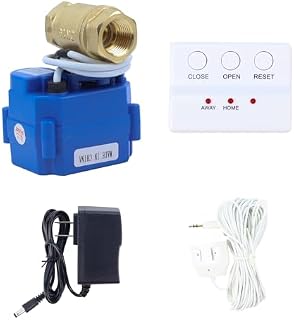
E-SDS 1-inch Water Leak Detector with Automatic Shutoff Valve, Sensors and Sounds Alarm, Water ShutOff Valve System, Home Water Monitor Flood Prevention for Laundry,Water Heaters and More
Weight
0.74kg
Shutoff valves · 400 g – 1.5 kg · 45 products
Weight is +9% against the class median of 0.68.
E-SDS 1/2in Water Heater Leak Detector with Automatic Shut Off Valve, Sensors and Sounds Alarm, ,Automatic Water Leak ShutOff System for Pipes 1/2in NPT for Laundry, Water Heaters and More
Weight
0.57kg
Shutoff valves · 400 g – 1.5 kg · 45 products
Weight is -16% against the class median of 0.68.
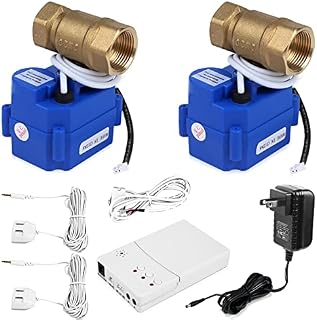
E-SDS Automatic Water Leak Shut Off Valve System,Water Leak Detector with 2 Valves,2 Sensors and Sounds Alarm,for Pipes 3/4 NPT,Flood Prevention for Laundry Washing Machines,Water Heaters and More
Weight
Not stated
This listing does not publish a figure, so it cannot be placed against the baseline.

Smart Home Water Toilet Leak Detector Alarm and Automatic Shut Off Valve – Water Sensor Alarm Shut Off Tool – Easy Installation – Battery Operated – Protect Your Home from Water Damage
Weight
Not stated
This listing does not publish a figure, so it cannot be placed against the baseline.

NSF Certified YoLink FlowSmart All-in-One Smart Water Meter & Auto Shutoff for ¾″ Pipes, LoRa Long-Range, Real-Time Leak Detection, 10-Year Battery, 80+ Device Ecosystem, Hub Included – YS5018
Weight
Not stated
This listing does not publish a figure, so it cannot be placed against the baseline.

Frizzlife LP365 Smart Water Monitor and Automatic Shutoff – 0.01GPM Ultrasonic Micro Leak Detection, APP Wi-Fi Remote Control, Real-Time Flow/Temp Monitoring, NSF/ANSI 61 & 372 Certified, 1.25" and 1"
Weight
Not stated
This listing does not publish a figure, so it cannot be placed against the baseline.