

Freeze Sensors & Cold-Weather Protection
Freeze sensors are temperature-threshold devices that alert you when a pipe is at risk of freezing — before ice forms and before a burst pipe puts water on the floor. That distinction matters: a moisture sensor tells you water is already present, while a freeze sensor gives you a window to act while the pipe is still intact. This page compares how freeze sensors work, where they belong in a home, and how they relate to the moisture-detection products covered elsewhere on this site.
How Freeze Sensors Work
A freeze sensor is built around a temperature probe rather than a moisture probe. It monitors the ambient air temperature at its mounting location — or, on some models, the surface temperature of a pipe itself — and triggers an alert once that reading crosses a set low-temperature threshold. Most consumer units use a fixed or adjustable threshold in the 35–40°F range, chosen because water inside a pipe typically does not reach freezing until surrounding air has been colder than 32°F for a sustained period. The alert is meant to arrive with enough lead time for a homeowner, property manager, or neighbor to intervene — raising the thermostat, opening a cabinet to let warm air reach exposed plumbing, or activating pipe heat tape — before ice actually forms inside the line.
Research-based comparison — we have not physically tested these products. Our analysis uses manufacturer specifications, manuals, warranty/support policies, safety certifications, independent test data where available, and current marketplace availability.
Connectivity works the same way it does across this site’s other categories: WiFi models connect directly to a home router, while Zigbee or Z-Wave freeze sensors depend on a compatible hub. Buyers evaluating a hub-based freeze sensor should read our Zigbee/Z-Wave Hub-Dependent Sensors page first.
Key Decisions Before You Compare Models
Placement in unheated spaces
Freeze sensors do their most useful work in crawlspaces, unheated garages, three-season cabins, and basement corners far from a heat source — the locations where a home’s HVAC system provides the least protection. A sensor mounted in a heated living room rarely earns its keep; the value is concentrated at the coldest, least-monitored point in the plumbing run.
Freeze + leak combo sensors
Some units monitor both temperature and moisture in a single housing, alerting on either condition. A combo sensor covers the two failure modes that matter most for an exposed pipe — freezing before the fact, and a leak after a joint has already failed — without requiring two separate devices at the same location.
Pairing with pipe heat tape
A freeze sensor and heat tape solve different halves of the same problem: the sensor detects risk and alerts you, while heat tape is the mitigation that keeps a pipe above freezing. Neither substitutes for the other — heat tape without a sensor can fail silently, and a sensor without heat tape only tells you a problem exists without doing anything about it.
Alert threshold and early-warning value
A typical alert threshold in the 35–40°F range is set deliberately above 32°F to build in response time. The cost asymmetry is the whole argument for the category: freeze sensors are the least expensive hardware covered on this site, with the large majority listing in the under-$30 tier, while a burst-pipe cleanup involving water extraction, drywall, and flooring repair commonly runs into five figures.
Freeze Sensors vs. Moisture Leak Sensors
This distinction is worth being explicit about, since product listings do not always make it clear. A standard leak sensor (covered on our Standalone Water Leak Detectors page) uses conductive probes or a moisture-sensitive pad to detect water contact — it is reactive by design and cannot alert until water is already present. A freeze sensor is preventive, catching the condition that precedes a pipe failure rather than the failure itself. Our Freeze Sensor vs. Standard Leak Sensor guide covers cases where a property benefits from both installed side by side.
Installation Considerations
Most freeze sensors are battery-powered and mount with an adhesive pad, a screw bracket, or a magnetic base, which keeps installation simple compared to a shutoff valve. Placement requires judgment rather than tools: the sensor should sit near the coldest exposed section of pipe, not simply near an outlet or a convenient shelf. In a crawlspace, that typically means mounting near the rim joist or an exterior wall where cold air infiltrates first; in a garage, placement near the header above the garage door tends to give the earliest warning.
Battery life matters more here than for many sensor types, since these units are often installed in locations inconvenient to check regularly, such as a crawlspace accessed only through an exterior hatch. Manufacturer-rated battery life commonly falls in the one-to-two-year range, and low-battery alerts sent through the companion app are worth confirming — a sensor that goes silent from a dead battery provides no protection at all.
Certifications and Typical Price Range
Because freeze sensors are frequently deployed in cold, damp, or harsh environments, an operating temperature rating and an ingress protection (IP) rating are worth checking against the installation location — a sensor rated only for indoor, climate-controlled use may not perform reliably once temperatures drop well below freezing for extended stretches. Wireless range also matters more here than in a typical indoor installation, since crawlspaces and detached garages sit farther from a router or hub than a kitchen sensor would.
This is the cheapest category on the site by a clear margin: roughly three-quarters of what is listed sits in the under-$30 tier, and most of the remainder is in $30-75. Combo freeze-and-leak sensors, which add a moisture-detection circuit, and probe or weatherproof models built for outdoor and submerged placement, are what push a listing into the higher tiers; a small number of multi-sensor kits and base-station systems reach $75-200. Multi-sensor kits covering several rooms, or a crawlspace plus a garage, bring the effective per-sensor cost down further. Current prices are best checked directly on Amazon rather than relied on from a fixed figure here; the full comparison table shows where nine specific sensors fall.
Who Should Not Buy a Standalone Freeze Sensor
A freeze sensor is the wrong primary purchase for a property whose main risk is a slow leak from an aging water heater or supply line in a heated space — that calls for a moisture sensor, not a temperature sensor. It is also of limited value alone for an unattended vacation property, where an alert with no one to respond does not prevent a burst pipe; that situation is better served by a system pairing monitoring with automatic response, covered on our Detector + Shutoff Combo Systems page, or a cellular-connected monitor on our Cellular & No-WiFi Vacation-Home Monitors page.
Common Questions
What temperature should a freeze sensor be set to alert at?
Most consumer freeze sensors ship with a default or adjustable threshold in the 35–40°F range. Setting the threshold above freezing rather than at exactly 32°F builds in lead time, since the sensor reads ambient air rather than the water temperature inside the pipe, and pipes lag behind ambient air changes.
Do I need a freeze sensor if I already have a leak detector?
They cover different failure points. A leak detector confirms water is present after a failure has occurred; a freeze sensor warns before that failure happens. In a property with exposed or marginally insulated plumbing, the two are complementary, and some combo units handle both in one device.
Does a freeze sensor prevent a pipe from freezing?
No. A freeze sensor only detects and alerts; it has no mechanism to add heat or protect the pipe itself. Actual freeze prevention comes from heat tape, insulation, or maintaining ambient heat in the space. The sensor’s role is telling you when those measures are failing or insufficient.
How many freeze sensors does a typical home need?
It depends on how many distinct unheated or marginally heated zones contain plumbing. A home with an unheated crawlspace, an attached garage, and a detached workshop would typically warrant a sensor in each location, since a single sensor cannot represent conditions across separate spaces.
Compare them
The finder below is already scoped to this class — 212 of the 988 products in the corpus. Widen or narrow it from there, or open the full leak detection finder to search everything at once. Every result is placed against the median for its own size band, where that band holds at least eight products with a stated figure.
212 products match

YoLink Smart Home Starter Kit: SpeakerHub & Water Leak Sensor 4 with 105dB Audio Alarm 1-Pack, SMS/Text, Email & Push Notifications, Freeze Warning, LoRa Up to 1/4 Mile Open-Air Range, w/Alexa, IFTTT
Weight
0.24kg
Freeze sensors · 150-400 g · 10 products
Weight is -11% against the class median of 0.27.

DAYTECH Fridge Door Alarm with Delay 1/2/3/4 mins Adjustable Close Windows Reminder 0-120 dB Refrigerator Alert Wireless Door Ajar Chime for Freezer Fridge Home 1 Set White
Weight
0.10kg
Freeze sensors · under 150 g · 72 products
Weight is +213% against the class median of 0.03.
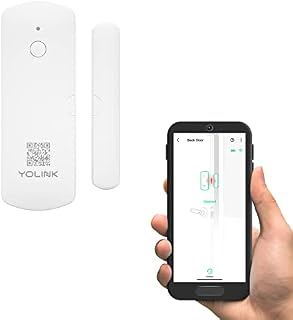
YoLink LoRa Smart Door & Window Sensor: Up to 1/4 Mile Open-Air Range, Door Left-Open Reminders, up to 5 Year Battery Life, Alexa, IFTTT, Home Assistant, Home Security, Hub Required
Weight
0.07kg
Freeze sensors · under 150 g · 72 products
Weight is +119% against the class median of 0.03.

WSDCAM Freezer Door Alarm with Delay When Left Open, 3/15/30/60 Seconds Adjustable Delay Refrigerator Wireless Fridge Alarm Door Open Loud 108 dB
Weight
0.05kg
Freeze sensors · under 150 g · 72 products
Weight is +56% against the class median of 0.03.

SimpliSafe Temperature Sensor – Hot/Cold Detection – Compatible with SimpliSafe Home Security System – Latest Gen
Weight
0.03kg
Freeze sensors · under 150 g · 72 products
Weight is -13% against the class median of 0.03.
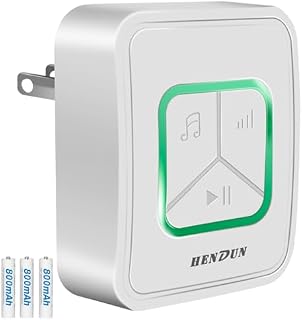
Hendun Power Failure Alarm, GFCI Circuit Failed Dector Alerter, Smart Power Outage Reminder for Deep Freezer in Garage, Circuit Breakers GFCI Trip Alarm(Rechargeable Batteries Included)
Weight
0.10kg
Freeze sensors · under 150 g · 72 products
Weight is +213% against the class median of 0.03.

WSDCAM Freezer Door Alarm When Left Open, 3/15/30/60 Seconds Adjustable Delay Wireless Fridge Alarm, 4-in-1 Sensor Chime Door Open Loud Bells Chimes 108dB, Refrigerator Alert 2 Pack
Weight
Not stated
This listing does not publish a figure, so it cannot be placed against the baseline.

Doorsound WiFi Freezer & Refrigerator Door Alarm – Text & App Notifications When Door is Left Open, Adjustable Delay & Volume, No Hub, No Subscription
Weight
Not stated
This listing does not publish a figure, so it cannot be placed against the baseline.
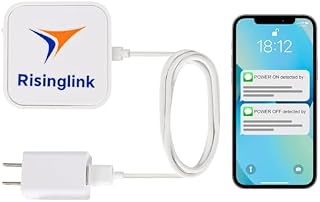
WiFi Power Outage Alarm Detector, Power Failure & Restoration Alerts with SMS Text, Email & Audible Alarm
Weight
Not stated
This listing does not publish a figure, so it cannot be placed against the baseline.
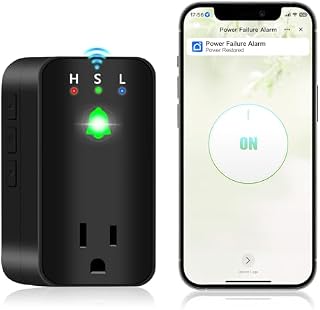
Power Failure Alarm, WiFi Power Outage Alarm with App Notifications & Voltage Detection, Outlet Power Loss Alarm with 110dB Adjustable LED Indicator, Power Monitor for GFCI Trips, Freezer, Sump Pump
Weight
Not stated
This listing does not publish a figure, so it cannot be placed against the baseline.

Leadleds 3-Pack Battery Operated 10-LED Motion Sensor Light Bar Stick-on Anywhere Portable Closet Cabinet LED Night Light Wall Light Stairs Light Step Light Bar
Weight
0.34kg
Freeze sensors · 150-400 g · 10 products
Weight is +25% against the class median of 0.27.

Daytech Freezer WiFi Temperature & Humidity Sensor, 1 Pack Smart Thermometer with App Alerts, Freezer Alarm, Remote Monitoring for Fridge, Greenhouse, Wine Cellar, No Hub Required
Weight
0.07kg
Freeze sensors · under 150 g · 72 products
Weight is +119% against the class median of 0.03.